
1986 PRS Pre-Standards Are Suddenly Worth Thousands: The 40th Anniversary Effect

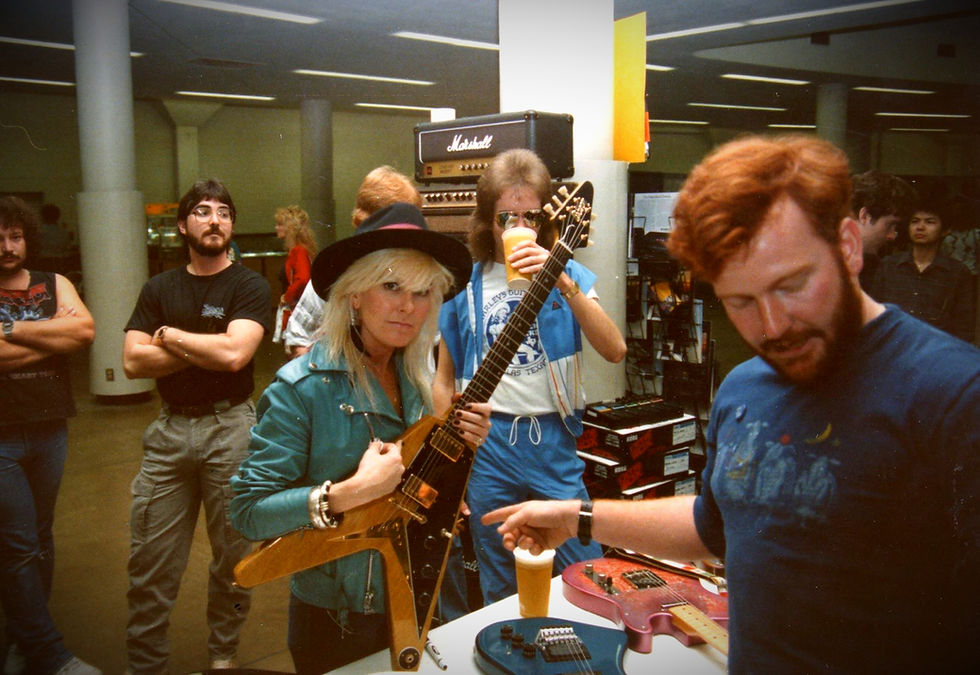
In 1981, at the Dallas Guitar Show, I was talking with Tom Murphy, a soon-to-be legend at Gibson!) when he was approached by a young guy wielding two rather plain looking mahogany bodied guitars. The man had a big bushel of hair on his head and was really animated in conversation. He was selling his work, his idea, and his vision. It was Paul Reed Smith. Another soon-to-be legend and contemporary visionary in the guitar world.
With Paul Reed Smith Guitars celebrating its 40th anniversary, vintage guitar collectors have zeroed in on a new "holy grail" era: 1985–1986 Pre-Standard Custom 24 and Standard models.
These highly coveted, small-shop builds come from the golden era right before PRS opened its legendary Annapolis factory. If you’ve been tracking the market lately, you already know: prices have jumped hard over the past few years.
Here is a dive into why these early masterpieces are skyrocketing, what they are fetching in today's market, and how to value them.

Why the 40th Anniversary Sparked a Surge
1. The Factory Spotlight
When PRS released its 40th Anniversary Custom 24 Limited Editions recently, it did more than just celebrate a milestone—it sent players and collectors straight back to the history books to look at the originals. Milestone anniversary years almost always create a powerful "halo demand" for first-run, foundational instruments. With the many iterations of "PRSi", the originals remain as an icons of a now, very successful company
2. Unrepeatable, Golden-Era Specs
The magic combination collectors hunt for reads like a vintage dream sheet:
Brazilian Rosewood Fretboards: Because PRS can no longer export Brazilian rosewood, pre-1991 boards carry a permanent, massive premium.
Stamped T&B Pickups & 1985-Dated Pots: The iconic early voice of PRS.
Milcom Tremolos & Phase I Tuners: Bulletproof, quality precision early-spec hardware.
Figured Maple Tops: From subtle violin-carve curls to striking flames, these early tops established the legendary PRS aesthetic before the "10-Top" grading system even existed.
The Perfectionist Growth Era
Built right at the intersection of a custom boutique shop and a rising legendary brand, these years represent a golden window where Paul Reed Smith was personally out to prove something to the world. Every guitar left the shop refined to absolute perfection to secure the company’s early reputation. A reputation that stands among the best in the world of guitar innovators!
What Collectors Are Paying Now
The market has shifted drastically. Early, hand-built PRS guitars are officially blue-chip vintage assets. Here is where the prices sit today:
Model / Era | Key Specifications | Current Market Value |
1985–1986 Custom 24 | Brazilian board, T&B pickups, 1985 pots, birds, Milcom trem | $10,000 - $18,000+ |
1986 PRS Pre-Standard 24 | All-mahogany body, Brazilian board, original T&B pickups | $6,000 – $10,000+ |
1987–1990 Custom 24 | 10-top, sweet switch, non-Brazilian board | $5,000 – $7,500+ |
1990s PRS Custom 24 | Early factory production models | $3,200 - $4,500+ |
(Prices reflective of Vintage Guitar Magazine 2026 Price Guide and Reverb search)
Crucial Factors That Determine Price
If you are looking to buy or sell an early PRS, keep these four value drivers in mind:
Production Numbers: Rarity is everything. Only about 1,000 Signature models were made between 1986 and 1990. True Pre-Standards from '85 and '86 are even rarer, making them the ultimate prize.
Brazilian Rosewood: If the fretboard is verified Brazilian rosewood (standard on pre-1991 models), it adds thousands of dollars to the valuation instantly.
Originality & Provenance: Un-swapped T&B pickups, untouched 1985 pots, a Milcom tremolo, and a hand-signed headstock are essential for maximum value. Re-fins or modern modifications will heavily impact the price.
Condition: The financial gap between "collector's condition with tiny light marks" and a player-grade guitar with heavy buckle rash can easily be a large price swing!
The Bottom Line
If you are sitting on an untouched, all-original 1986 Custom 24 with bird inlays and a Brazilian board, you may be holding a $15,000+ instrument that commanded just $8,000 to $12,000 a few short years ago. Even player-grade 1986 Standards without birds are pulling around $6,000 if they are unmolested. Given the trajectory of PRS, they will remain very collectable.

The 40th anniversary pulled back the curtain, and the market has spoken: these early, hand-built masterpieces are finally achieving the legendary status and commanding the price tags they rightfully deserve. Having crossed paths with Paul Reed Smith at numerous guitar shows over the years, and having toured his Stevensville, Maryland plant, I can attest that despite running a massive, globally successful company, Paul remains incredibly down-to-earth, deeply engaged, and as passionate about building exceptional instruments as he was back in the early days. He just doesn't have the "bushel of hair" anymore. Then again...neither do I!


Comments